
Bringing plants into your home can add beauty and improve air quality, but dog owners must choose greenery that’s non-toxic to their pets.
Below is a list of popular indoor houseplants that are widely available, easy to care for, and safe for dogs (even if ingested).
Each entry includes a brief description of the plant’s appearance and basic care requirements for light, water, and maintenance.
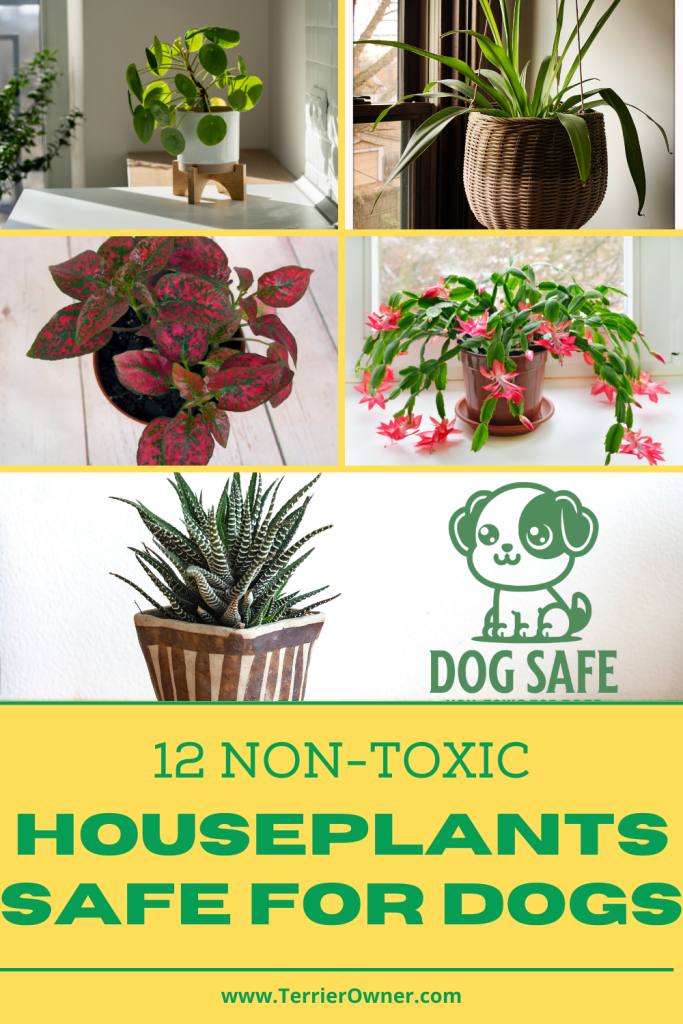
Spider Plant (Chlorophytum comosum)

Spider plants feature a rosette of slender, arching leaves that are usually green with white stripes. Mature plants often produce trailing stems with small plantlets (“spiderettes”) at the ends, giving the plant a cascading, spidery appearance.
This classic houseplant is non-toxic to dogs and is renowned for being one of the easiest houseplants to grow.
- Light: Prefers bright, indirect light but also tolerates lower light conditions. Avoid intense direct sun, which can scorch the leaves.
- Water: Water when the top inch of soil dries out; spider plants like slightly dry conditions between waterings. Do not overwater, as waterlogged soil can cause root rot.
- Maintenance: Very low maintenance. Spider plants thrive in average home humidity and will readily produce baby plantlets that you can leave on the mother plant or pot up to propagate new plants. Simply trim away any browned leaf tips to keep it tidy.
Boston Fern (Nephrolepis exaltata)
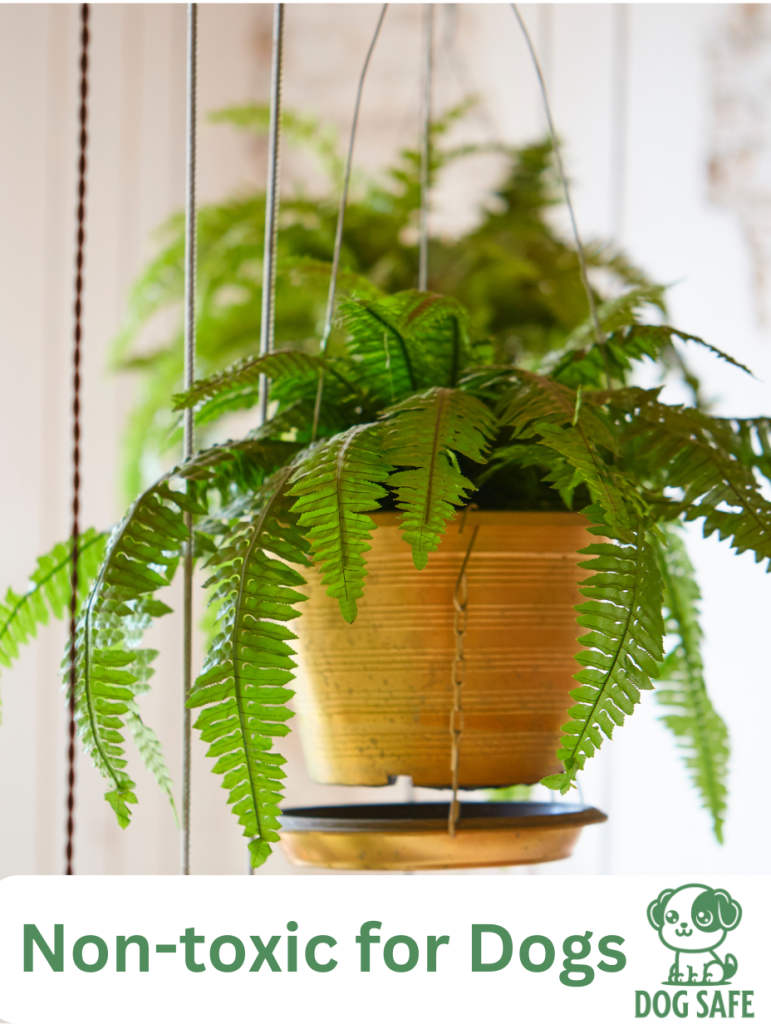
The Boston fern has lush, feathery fronds that arch gracefully, creating a bushy, elegant foliage display. As a “true” fern, its fronds shoot up and then arch outward, sometimes called a sword fern for its shape. It is non-toxic to dogs, meaning a curious nibble won’t harm your pup.
This fern is a popular, classic houseplant that adds a touch of greenery to hanging baskets or plant stands.
- Light: Prefers bright, indirect light (partial sun). Too much direct sunlight can scorch the delicate fronds, while too little light may lead to sparse growth.
- Water: Keep the soil consistently moist, but not waterlogged. Boston ferns thrive with regular watering and high humidity. Check the soil often and water when the surface begins to dry – they do not like to dry out completely.
- Maintenance: Moderate. These ferns appreciate a humid environment (occasional misting or a pebble tray with water can prevent frond browning). Place it away from drying heat vents. Remove any yellow or dry fronds to encourage new growth and periodically rotate the plant for even light exposure.
Parlor Palm (Chamaedorea elegans)

Parlor palm is a compact, tropical palm that sports light-green, feathery fronds. It stays manageable in size and was a popular accent in Victorian parlors – hence the name.
This palm is non-toxic to dogs and is known for being a low-maintenance indoor tree. It adds a tranquil, tropical vibe to any room without requiring much fuss.
- Light: Thrives in bright, indirect light but also tolerates low-light conditions quite well. It’s one of the few palms that can live in a somewhat dim corner, though growth will be slower in low light.
- Water: Water when the top inch of soil is dry to the touch. Parlor palms prefer evenly moist soil, but be careful to avoid overwatering. Allow any excess water to drain out, as the roots don’t like to sit in soggy soil.
- Maintenance: Very low. Parlor palms are slow-growing and typically reach about 2–4 feet tall indoors (though they can eventually get a bit larger over many years). They generally don’t need frequent repotting or pruning—simply trim off any truly brown or yellow fronds. This palm is an excellent choice for beginners due to its forgiving nature.
Money Tree (Pachira aquatica)
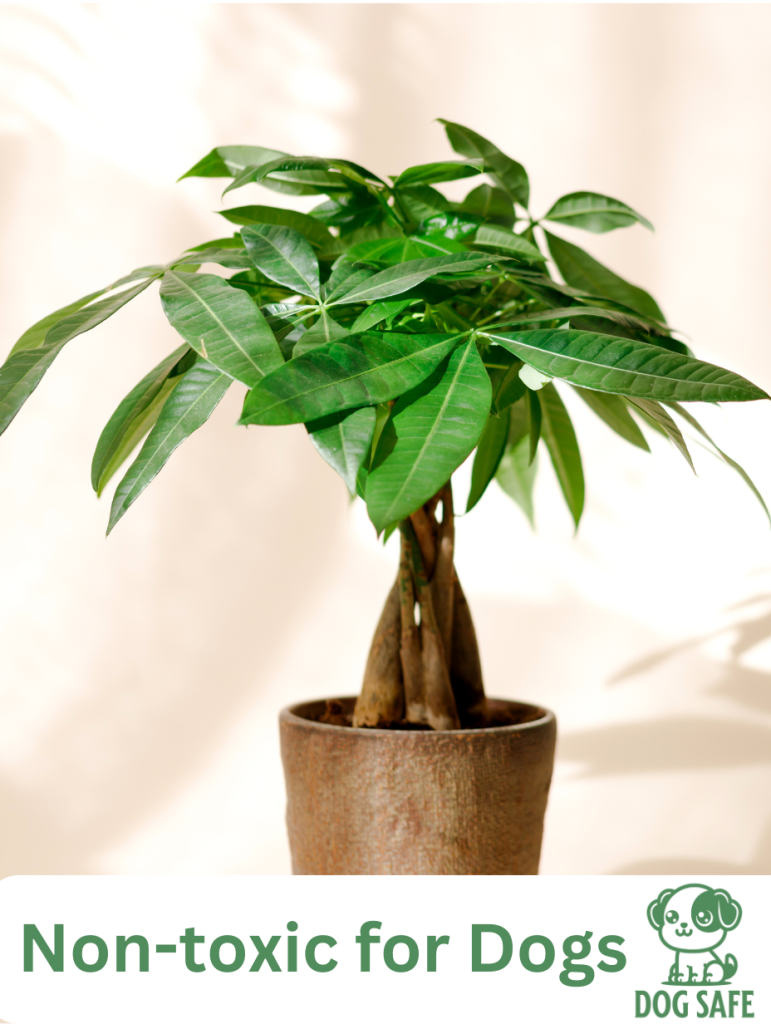
The money tree is a tropical plant often sold with a distinctive braided trunk and a canopy of glossy green palmate leaves (each leaf has 5–7 leaflets).
According to folklore it brings good luck, but importantly for pet owners, it’s non-toxic – you won’t have to worry if your dog chews on a leaf. Its attractive braided stem and lush foliage make it a popular indoor tree for homes and offices.
- Light: Grows best in bright, indirect light. It tolerates some direct sun (especially morning sun) and can also adapt to moderately low light conditions indoors. Avoid very dim locations to keep it growing robustly.
- Water: Water when the top inch of soil has dried out. Money trees like a lightly moist potting mix but do not overwater — they can suffer from root rot in waterlogged soil. Ensure the pot has drainage, and empty any excess water from the saucer.
- Maintenance: Moderate. Money trees prefer higher humidity (occasional misting of the leaves can be beneficial). They can grow into a small tree several feet tall over time, so you might need to repot into a larger container every couple of years as they mature. Other than that, they are relatively easy to care for – just wipe the leaves occasionally to keep them dust-free and shiny.
African Violet (Saintpaulia)
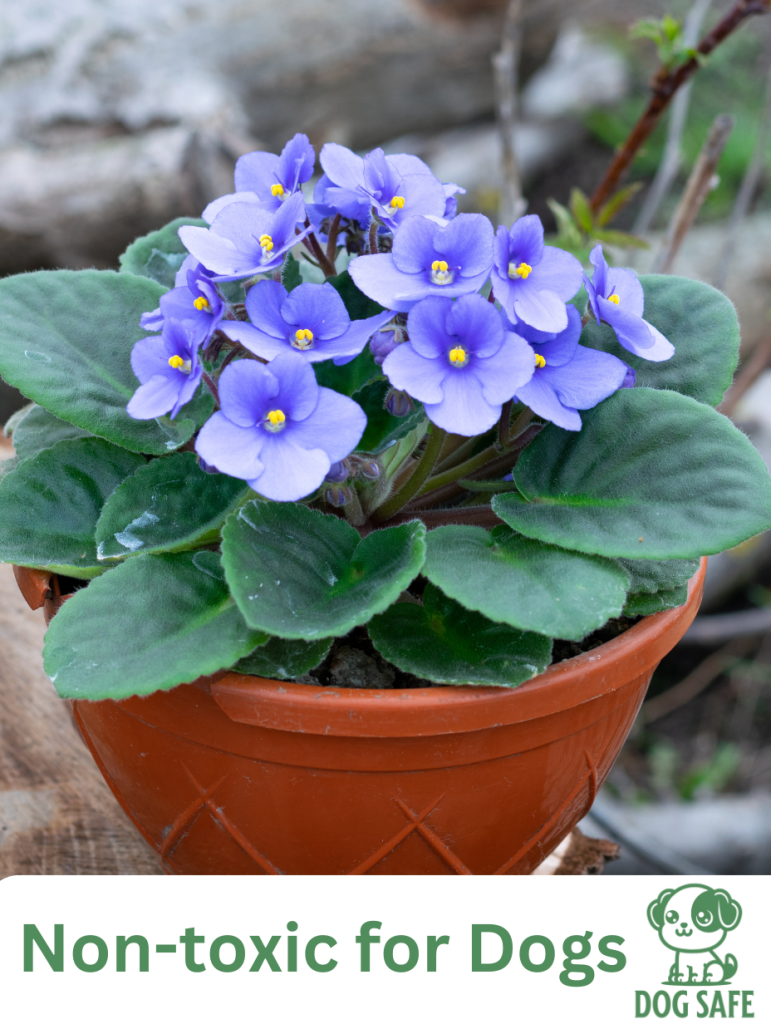
African violets are beloved flowering houseplants with soft, fuzzy round leaves and clusters of violet-purple (occasionally pink or white) blooms. They stay compact (typically under 6–8 inches tall) and can bloom multiple times a year under good conditions.
African violets are safe for dogs – they contain no toxic compounds – making them a great way to add color to your home without risk to pets.
- Light: Moderate to bright indirect light is ideal. They thrive under fluorescent grow lights or near an east- or north-facing window. (Direct sun can burn their leaves.)
- Water: Keep the soil consistently moist but not soggy. It’s best to water from the bottom by setting the pot in a tray of water, or carefully water the soil surface without splashing the leaves. Avoid getting the fuzzy leaves wet, as water can cause spotting or rot on the foliage.
- Maintenance: Moderate. African violets prefer room-temperature water and environments (they don’t like cold drafts). They appreciate humidity, but do fine in normal indoor conditions. Remove spent blooms and leaves to encourage continuous flowering. With proper care (and occasional light fertilizer), these little plants will reward you with frequent blooms.
Chinese Money Plant (Pilea peperomioides)
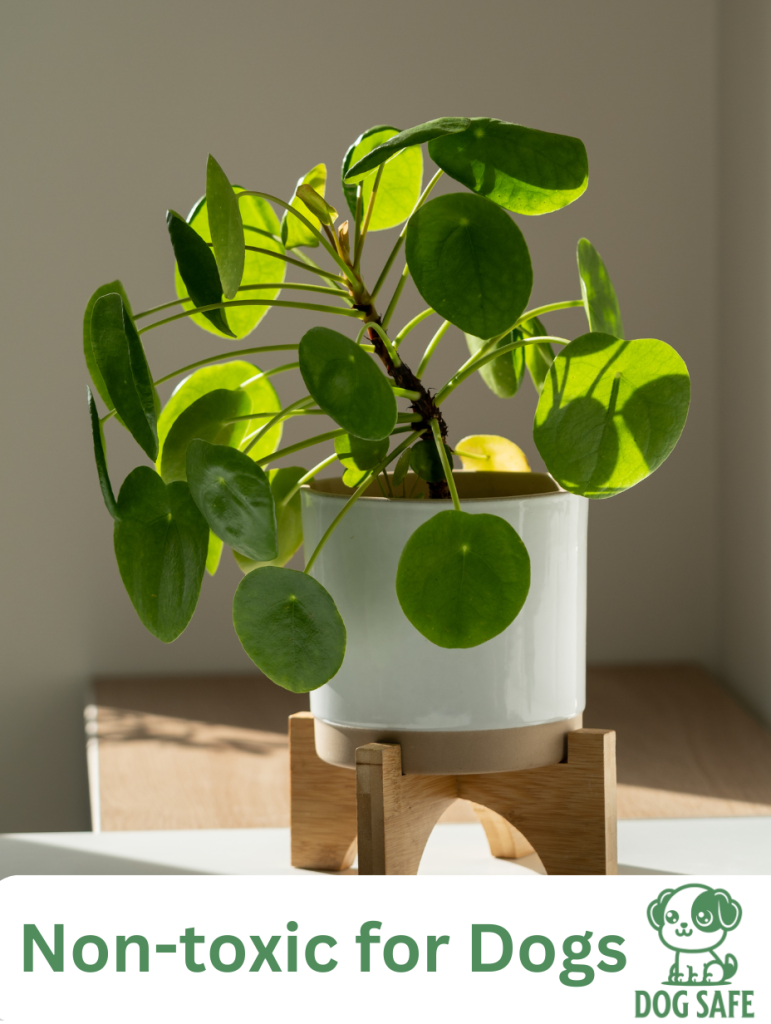
The Chinese money plant is a trendy houseplant known for its unique round, pancake-shaped leaves that are a vibrant green color. The leaves grow on long, thin stems arising from a central crown, giving it a distinctive UFO-like look.
This plant remains fairly small (about 12 inches tall and wide) and is non-toxic to dogs, so it’s a pet-friendly choice for tabletop greenery. Pileas also produce baby offshoots (“pups”) that you can replant, which is why one of its nicknames is the friendship plant (easy to share with friends).
- Light: Bright, indirect light is ideal for Pilea. It will also tolerate moderate light or even part shade indoors, though very low light may cause it to become leggy. Rotate the plant occasionally so it grows evenly and doesn’t lean toward the light.
- Water: Water thoroughly but infrequently. Let the soil dry out between waterings – Pilea does not like constantly wet soil. When the leaves start to droop, that’s a sign it’s thirsty. After watering, the leaves perk back up quickly.
- Maintenance: Low. Chinese money plants are easy to care for and fast-growing. Periodically remove any offshoots popping up in the pot and replant them if you wish. They prefer well-draining soil and might benefit from a balanced houseplant fertilizer once a month during the growing season, but they don’t have any special requirements.
Peperomia (Peperomia spp.)
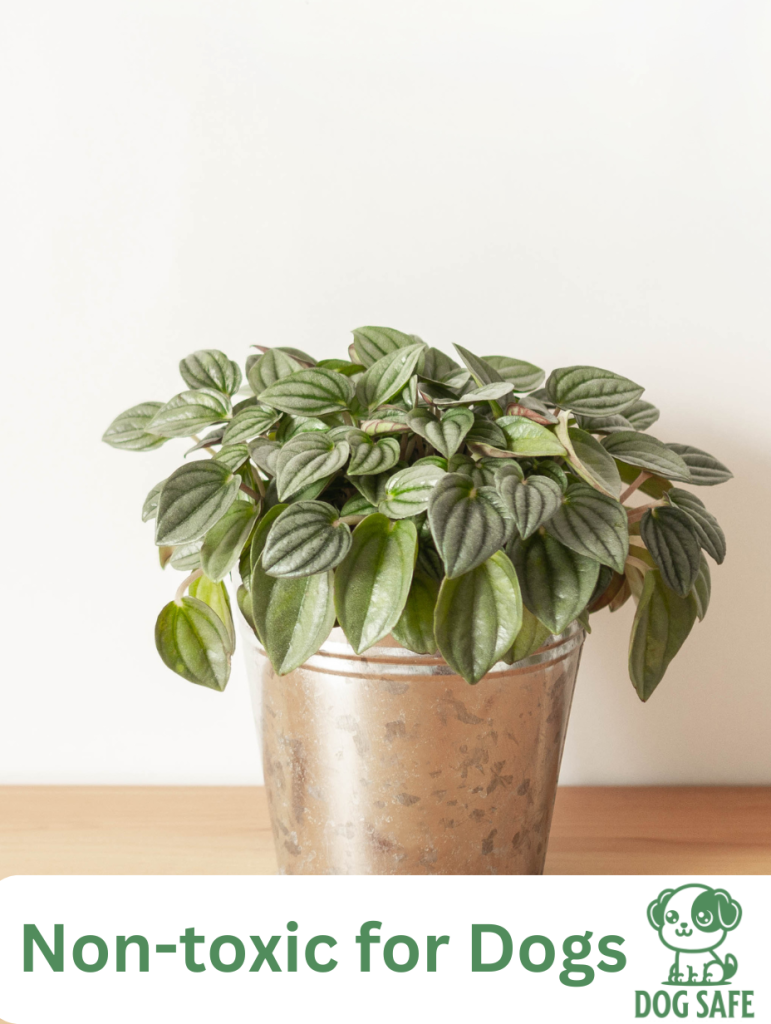
Peperomias are a diverse group of small, tropical foliage plants often called “radiator plants.” They come in many varieties with different leaf shapes, sizes, and colors – for example, some have thick green leaves, others are striped (like the watermelon peperomia with silver-and-green banded leaves), and some are even ripple-textured.
All peperomias are non-toxic to dogs, so you can safely keep these curious plants around pets. They typically have a compact growth habit, making them perfect for desks or shelves.
- Light: Bright to moderate indirect light is best. Peperomias do well near a window with filtered light. While many can tolerate lower light, their colors and growth will be better with medium light levels. Avoid intense direct sun, which can scorch their leaves.
- Water: Allow the top 1–2 inches of soil to dry out before watering again. Because peperomia leaves are somewhat succulent and can store water, they are forgiving if you forget an occasional watering. Overwatering is one of the few ways to harm a peperomia, so when in doubt, wait an extra day or two.
- Maintenance: Very low. Peperomias are slow growers and stay fairly small (generally 6–12 inches tall). They rarely need repotting (only when root-bound) and don’t require frequent pruning – just pinch back any leggy stems if you want a bushier plant. These plants also don’t demand high humidity or special conditions, making them easy-care houseplants.
Prayer Plant (Maranta leuconeura)
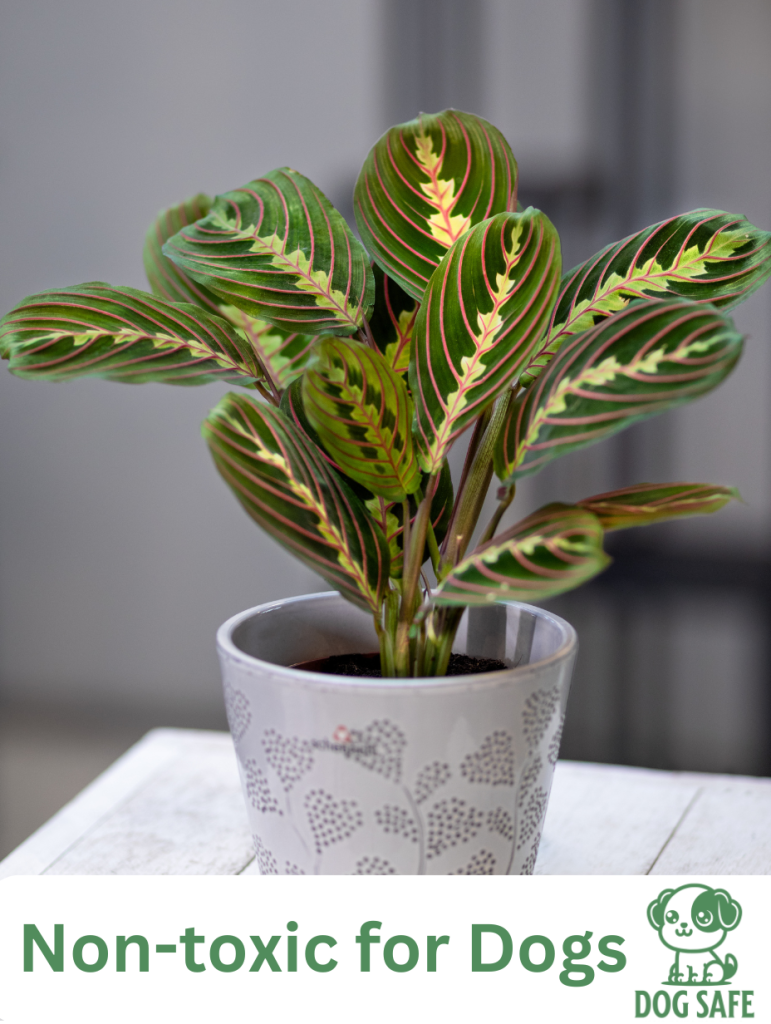
The prayer plant is admired for its beautiful ornamental leaves: typically oval-shaped, green with striking pinkish-red veins or patches of lighter green. Uniquely, the leaves fold up at night as if in prayer, which is how it got its name.
This plant is non-toxic to dogs, so even if your pet is attracted to its eye-catching foliage, it won’t be harmed. Maranta stays relatively small (about 6–8 inches tall) and is known to be quite forgiving and easy to care for, as long as you give it a bit of humidity.
- Light: Does well in medium to low light conditions. Bright, indirect light is fine too, but avoid direct sun which can fade or scorch the leaf patterns. In lower light, its growth will slow a bit but it will generally maintain its decorative foliage.
- Water: Keep the soil slightly moist at all times, but not soaking wet. Water the prayer plant when the top half-inch to inch of soil begins to dry. It doesn’t like being completely dried out, so regular small waterings are better than infrequent deep soaks. Good drainage is important to prevent root rot.
- Maintenance: Low to moderate. Prayer plants appreciate higher humidity – they thrive in kitchens, bathrooms, or near a humidifier. You can mist the plant occasionally if your home is very dry. They prefer warm temperatures and don’t do well with cold drafts. Other than that, just remove any yellowed leaves and keep an eye out for occasional brown crispy tips (a sign it needs more humidity or less direct light).
Moth Orchid (Phalaenopsis)
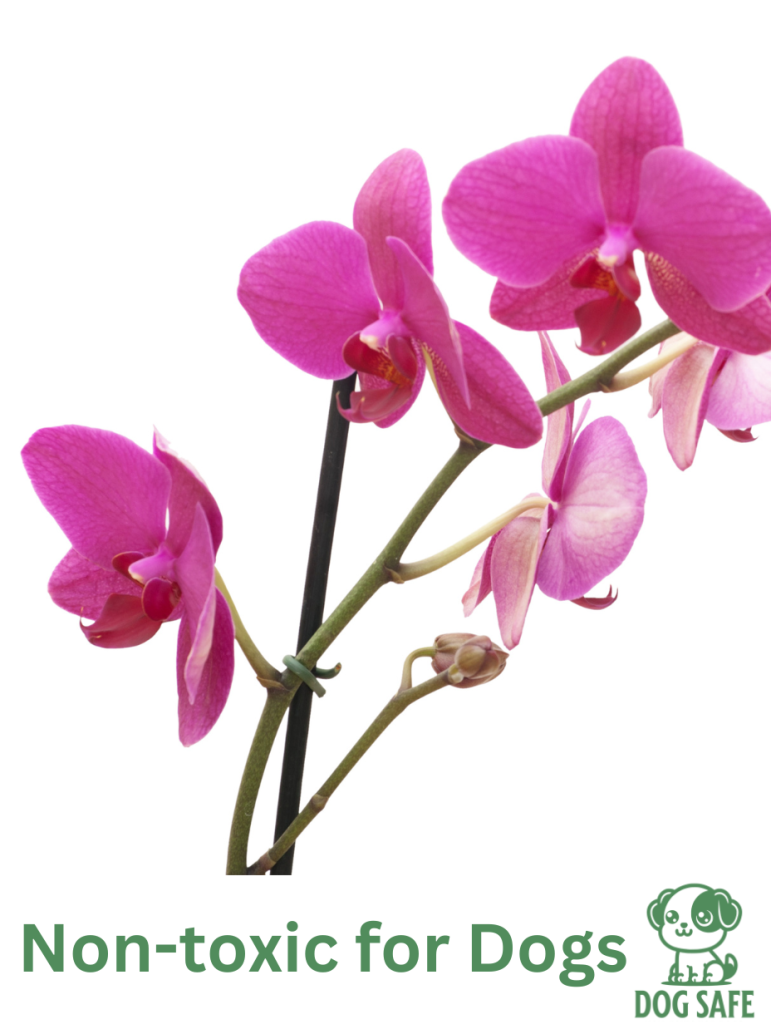
Moth orchids are one of the most common and easy-to-grow orchid varieties. They feature elegant arching spikes of blooms that can last for weeks or even months. Flowers come in various colors from white and pink to purple, spotted, or striped.
Despite their exotic appearance, Phalaenopsis orchids are non-toxic to dogs, so you can enjoy their beautiful blooms without worry. They also have thick, leathery green leaves at the base and aerial roots that often extend out of the pot.
- Light: Provide bright, indirect light for best blooming. An east-facing or shaded south/west-facing window works well. They can tolerate moderately low light (they’ll survive), but they may not flower as well in those conditions. Avoid harsh direct sun, which can scorch the leaves.
- Water: Water about once a week on average, but adjust based on conditions (more frequently in a dry, warm environment, less in cool or humid conditions). Let the potting medium (often a bark mix for orchids) dry out slightly between waterings. A good practice is to water thoroughly, allowing water to flush through the pot and drain out completely. Never let the orchid sit in standing water.
- Maintenance: Moderate. Moth orchids prefer humid environments and good airflow around their roots. Place the pot on a humidity tray (a shallow tray filled with water and pebbles) or mist the plant occasionally if your home is very dry. After the orchid finishes blooming, trim the flower spike down to a node or remove it entirely to encourage the plant to put energy into new growth (and possibly re-bloom). Fertilize lightly with a balanced orchid fertilizer during the growing season for best results. Overall, Phalaenopsis are fairly hardy as far as orchids go, and with basic care, they will re-bloom year after year.
Christmas Cactus (Schlumbergera bridgesii)
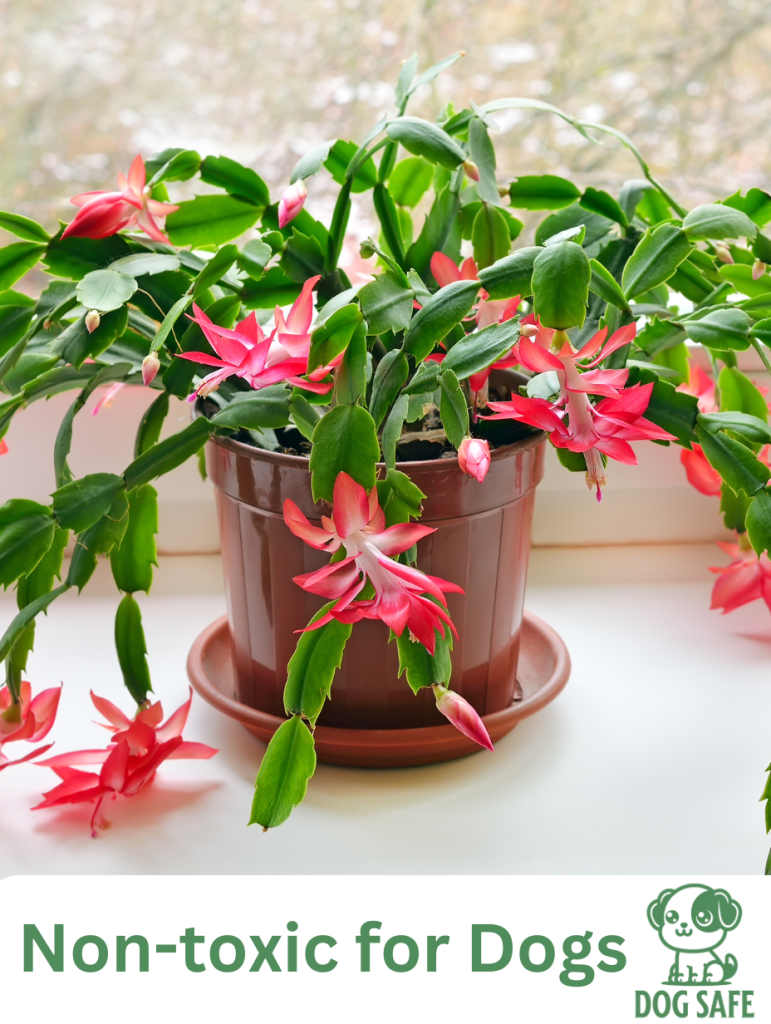
The Christmas cactus is a festive succulent houseplant known for its flat, segmented green stems and vibrant tubular flowers that typically appear in winter. It often blooms around the holidays (hence the name), displaying pink, red, or white flowers at the ends of its drooping stems.
Unlike its look-alike, the toxic Christmas Eve plant (amaryllis), a Christmas cactus is non-toxic to dogs. That said, if a dog eats a large amount of it, it could cause minor stomach upset, but it won’t poison them. This plant is a great way for pet owners to enjoy holiday blooms safely.
- Light: Prefers bright, indirect light. It will also grow in medium light, though flowering might not be as profuse. Direct hot sun can make the stems look yellowish or reddish, so provide some curtain-filtered light if placed in a very sunny window.
- Water: Water when the top inch of soil feels dry to the touch. During active growth and flowering (fall and winter), keep the soil slightly more moist with regular waterings, but still ensure good drainage. In spring and summer (its resting phase), you can allow a bit more drying out between waterings. Always avoid waterlogged soil to prevent root rot.
- Maintenance: Low. Christmas cacti are long-lived and relatively easy to care for. They appreciate a bit of extra humidity but generally do fine in normal home conditions. After flowering, allow the plant a short rest with less frequent watering. To encourage blooming for the next season, provide cooler nighttime temperatures and long nights (shorter daylight) in the fall. Other than that, occasional fertilization during the growing season and repotting once every few years (only if root-bound) will keep your Christmas cactus thriving.
Haworthia (Zebra Plant Succulent)

Haworthia is a small succulent that closely resembles an aloe vera plant in form, but with distinctive zebra-like white striping on its leaves. It grows as a tight rosette of firm, pointed green leaves that are banded or spotted with raised white ridges.
A mature haworthia stays very petite (often just 3–5 inches tall), making it perfect for desks or small pots. Importantly, unlike similar-looking succulents like aloe, Haworthia is non-toxic to dogs, so it’s an excellent pet-safe succulent option.
- Light: Bright light is ideal, but Haworthias are quite tolerant of a range of light conditions. They do well in bright, indirect light or partial sun. In fact, they can handle full sun in many cases, but be cautious with intense midday sun through a window, as it can sometimes cause the leaves to turn reddish or brittle. They also tolerate moderate to low light, though growth may slow and the plant can lose some of its vibrant green color in very low light.
- Water: Like most succulents, water sparingly. Allow the soil to dry out thoroughly between waterings. In general, watering about once every 1–2 weeks is sufficient for Haworthia. In the warmer growing season, you may water a bit more often (when the soil is completely dry), and in the winter months reduce watering to maybe once a month. Overwatering is the main thing to avoid – the thick leaves store water, and too much moisture can lead to root rot.
- Maintenance: Very easy. Haworthias are slow-growing and require minimal care. They thrive in average home temperatures and do not demand high humidity. They produce small offsets (pups) around the base which you can gently separate and pot up if you want to propagate new plants. There’s generally no need for frequent fertilization; feeding lightly once or twice in the growing season is plenty. With their forgiving nature, Haworthias are ideal for beginners or anyone who tends to forget to water their plants.
Polka Dot Plant (Hypoestes phyllostachya)
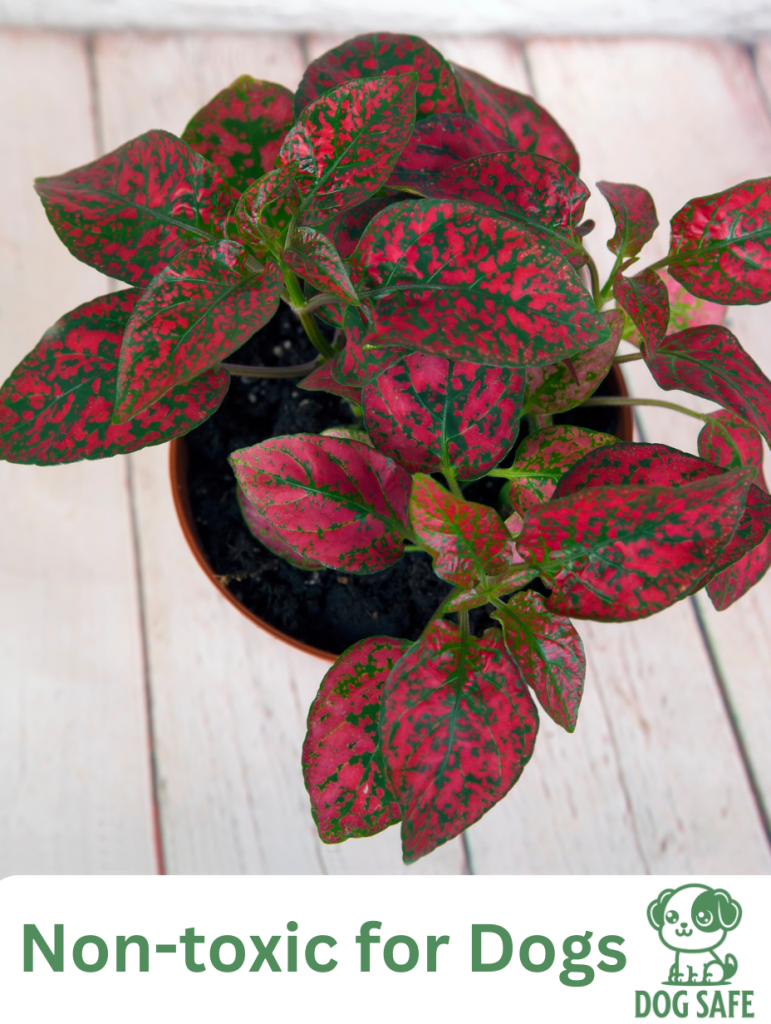
Polka dot plants are petite tropical plants prized for their freckled foliage. The leaves are usually green splashed with bright pink, but there are also varieties with white or red splashes, giving the plant a painted, polka-dotted look.
This fun burst of color stays small (around 6–12 inches tall) and is non-toxic to dogs – if your pet munches a few leaves, it shouldn’t cause harm, aside from maybe mild stomach upset if a lot is eaten.
- Light: Polka dot plants do best in bright, indirect light. Plenty of light will keep their colors vibrant. They tolerate partial shade, but in very low light they may become leggy as the stems stretch for more light. If you notice the plant losing color or getting spindly, try moving it to a brighter spot.
- Water: Moderate watering needs. Keep the soil lightly moist, and water when the top 1/2 inch of soil has dried out. These plants don’t like to dry out completely; if the soil gets too dry, you might see the leaves start to wilt (they usually perk up again after watering). On the other hand, avoid constantly soggy soil. Aim for a balance by checking the soil regularly.
- Maintenance: Moderate. To maintain a bushy, compact shape, pinch back the tips of the stems occasionally – this will encourage the plant to branch out rather than grow tall and lanky. Polka dot plants enjoy normal household temperatures and humidity. They are fast growers but also relatively short-lived; many people treat them as annuals or replace them every couple of years when they become less vigorous. However, they can bloom with small purple flowers (though the blooms are not very showy), and you can collect seeds or propagate cuttings to continue growing new polka dot plants.
References: All plants listed above are identified as non-toxic to dogs by reputable sources such as the ASPCA, Better Homes & Gardens, or The Spruce. Care guidelines are summarized from horticultural references and expert recommendations to ensure each plant stays healthy.
Always double-check a plant’s scientific name when purchasing, as some plants have look-alike relatives that might not be safe for pets. With these dog-friendly houseplants, you can cultivate your indoor jungle without worry!