
Westies are known for their bold personalities and persistent barking. When typical fixes like extra exercise, obedience training, or desensitization haven’t worked, an unconventional trick might do the job.
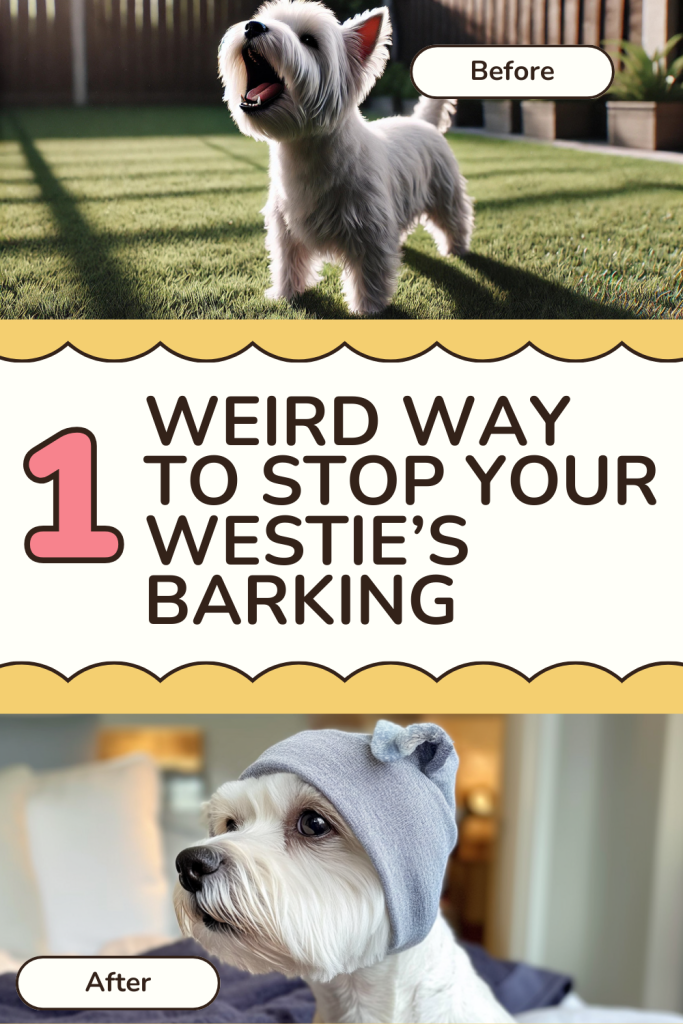
One lesser-known method to calm a noisy Westie is using a dog ear wrap (often called “Quiet Ears” or a Happy Hoodie). This technique may sound counterintuitive – essentially putting a soft fabric hood over your dog’s ears – but owners have reported surprising success with it.
Below, we’ll explain why it works and how you can use it to help curb your Westie’s barking.
What Are “Quiet Ears” and Why Do They Work?
The Happy Hoodie and Quiet Ears are a simple gadget: a stretchy, tube-like fabric hood that slips over a dog’s head, gently holding the ears flat against the skull.
Originally developed to protect dogs’ hearing during grooming (for example, to muffle the noise of blow dryers), these wraps provide a layer of insulation against sound and apply gentle compression around the ears and head.
In effect, they muffle sudden noises that might trigger barking and create a comforting “swaddling” sensation.
This is surprising to many owners – after all, covering a dog’s ears isn’t a typical training approach. However, the concept is similar to how a ThunderShirt (anxiety wrap) works: the light, constant pressure can have a calming effect on the nervous system.
By dampening sound and providing gentle pressure, an ear wrap can lower a Westie’s arousal level. Your Westie may feel less compelled to sound the alarm at every little noise because those noises are muted and less startling.
Anecdotal success stories back up this method’s effectiveness. For example, a rescue dog named Myko became a minor TikTok sensation after his owners discovered that a snug ear cover could halt his non-stop anxious barking.
Myko had a habit of barking for minutes on end at even small stimuli, but after slipping on a cute Eeyore-themed ear wrap (paired with praise and treats), he calmed down within minutes. He even began to associate the hood with relaxation and safety, to the point that his owners now use it regularly to help him stay mellow.
Another dog owner reported that simply putting on the hoodie “calms and quiets him down immediately” when the pup starts barking excessively. These accounts suggest that, when used correctly, an ear-wrapping hood can take a Westie from rowdy to relaxed surprisingly fast.
Why does this work so well? First, noise reduction: Westies often bark in response to sounds (a doorbell, animals outside, or unknown noises). The ear wrap dulls the intensity of these sounds, so the trigger doesn’t seem as urgent or alarming.
Second, gentle compression around the ears and head can be inherently soothing. Much like how some dogs relax when gently held or when wearing a snug sweater, the light pressure can reassure them.
In Myko’s case, his ear cover effectively told him “it’s time to relax now,” and he quickly settled once it was on. The wrap likely gave him a sense of security in addition to quieting the environment.
How to Implement the Ear Wrap Method
If you want to try this unconventional method with your Westie, follow these steps to ensure it’s a positive experience for your dog:
- Get the Right Gear: You can purchase a purpose-made Quiet Ears hood or Happy Hoodie in a size suitable for small dogs. It’s basically a soft, elastic snood that fits snugly around the head. In a pinch, even a soft neck gaiter or stretchy headband can work – just make sure it’s not too tight or uncomfortable. The material should be secure but gentle, covering your Westie’s ears completely.
- Introduce It Positively: Don’t just pop the wrap on out of nowhere, as that might spook your Westie. Introduce the ear wrap gradually and pair it with something your dog loves. Let your Westie sniff it first. Then, try sliding it over their head for just a few seconds while offering treats or praise. This mirrors what Myko’s owners did – they gave him lots of praise and treats the moment the hood went on. The goal is to have your pup associate wearing the wrap with good things (treats, affection) so they tolerate it calmly.
- Short Practice Sessions: Practice having your Westie wear the ear wrap at calm times initially. Put it on for a minute or two while you’re just hanging out, and reward the dog for staying peaceful. If your Westie seems comfortable, gradually extend the time. Keep your demeanor upbeat and calm so your dog doesn’t feel any anxiety from you.
- Use It During Bark-Prone Situations: Once your Westie is used to the hood, deploy it in situations when barking is likely. For example, if your Westie always barks at the mail carrier or every noise outside, put the ear wrap on before the usual barking time. Likewise, if company is coming over (and your Westie tends to bark at guests or doorbells), slip on the Quiet Ears a few minutes beforehand. The muffled sound of the doorbell or the reduced stimulation can prevent that initial explosion of barks. If the barking is triggered by random outdoor sounds at night, you might use it during your Westie’s evening relaxation time. Always continue to pair the hood with calm praise or even a chew toy to keep the experience positive.
- Monitor Your Dog’s Comfort: Watch your Westie’s body language when the ear wrap is on. Most dogs will relax, but a few might feel unsure at first. Signs of discomfort include trying to paw it off repeatedly, excessive lip licking, “frozen” posture, or wide eyes (sometimes called whale eye). If your dog seems stressed, remove the hood and try again later for a shorter period with more treats. The aim is to help, not to cause any panic. Many dogs actually start to enjoy the calmness it brings, but each pup is different.
- Use as a Tool, Not a Substitute for Training: Remember that this is a management tool to aid in the moment. While it can interrupt and prevent barking, it doesn’t teach your Westie long-term behavior change by itself. For lasting improvement, you’ll still want to address the reasons behind the barking (whether it’s alert barking, boredom, or anxiety) through training or environment changes. Think of the Quiet Ears wrap as a short-term calmizer or a way to set your dog up for success during training. It’s especially useful for situations you can’t easily train for in the moment (like construction noise down the street or a thunderstorm).
Why This Technique Can Be So Effective (and What Experts Say)
It might feel odd or even funny to see your Westie with what looks like a tiny hoodie over their ears, but the results can speak for themselves. By lowering the volume of the world, you’re basically turning down your dog’s urge to bark.
Westies often think they need to respond vocally to every new sound – but if they don’t hear it clearly or it sounds distant, the impulse to bark can diminish. And by snugly cradling the dog’s head, many Westies feel a bit hugged and reassured, rather than on high alert.
Importantly, this method has been backed by anecdotal successes from real dog owners and is even inspired by common practice in grooming (where keeping dogs calm and still is crucial).
It’s not a gimmick or a punishment; it’s more like giving your dog noise-canceling headphones or a comforting head swaddle.
In fact, some pet owners use actual doggy earmuffs or noise-canceling headsets for the same purpose– the principle is to reduce the auditory stimuli that set a dog off.
Expert trainers and behaviorists do note, however, that tools like this are not a magic cure for an overly barky dog on their own. They caution that while an ear wrap can momentarily stop the barking and help a dog feel calmer, it doesn’t address the underlying cause of the barking or teach new behavior.
In other words, you’re managing the symptom (noise and excitement) in the moment, but you should still work on confidence-building and training for the long run.
Rocky Kanaka, a pet behavior expert, explains that there is “no quick fix or magic solution” for reactivity or anxiety, emphasizing that it takes training and patience to truly resolve those issues.
So, use this quirky trick as one part of your strategy. It’s excellent for immediate relief – like a volume dial for your Westie – especially during times you need quiet (conference calls, baby’s naptime, etc.), or to help kick-start a calmer habit.
Just be sure you’re also helping your Westie learn when to be quiet on their own, with positive reinforcement when they’re calm.
Final Thoughts
Stopping a Westie from barking sometimes requires thinking outside the box. The ear wrap “Quiet Ears” technique is a surprising yet effective tool that many owners are discovering. It’s safe, simple, and humane – essentially giving your dog a cozy hug and some peace from the noise.
By reducing what your Westie hears and providing gentle comfort, you remove the fuel for a lot of their barking. Give it a try in a controlled, positive way, and you just might find that your little terrier can relax in silence more than you ever thought possible.
With consistency and care, this unconventional method could bring sweet relief from constant barking, for both your Westie and you.