
If you’ve ever been greeted by an overly excited Westie who thinks jumping is the best way to say hello—trust me, you’re not alone.
West Highland Terriers are small, but they’ve got big energy. And when they’re happy to see you (or anyone, really), they tend to express it by launching themselves like a little white missile right into your legs.
It might seem cute at first—especially if your Westie is still a puppy—but as they get older, it becomes a bit less adorable. Not to mention, not everyone enjoys being attacked (in a friendly way) the moment they walk through the door.
The good news? With some patience and a few easy strategies, you can teach your Westie not to jump on people. I’ll walk you through what worked for me and how you can use the same approach with your own dog.
Let’s get into it.
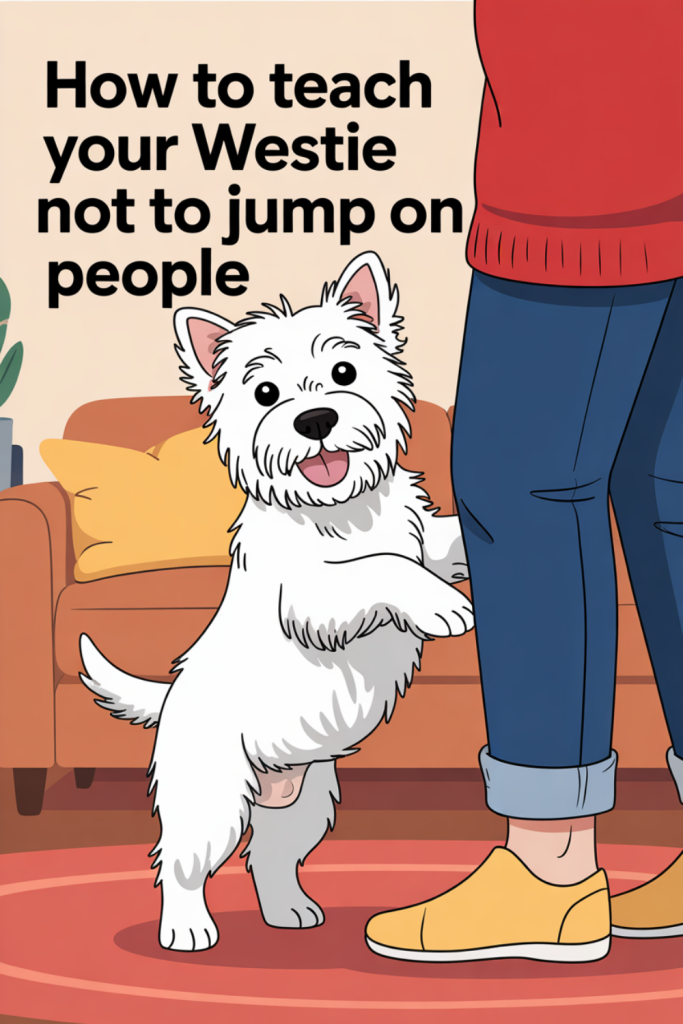
Why Do Westies Jump on People?
Before you can teach your Westie to stop jumping, it helps to understand why they do it in the first place.
The main reason? Excitement.
Westies are social little dogs who get pumped up when they see someone they like—whether it’s you coming home from work, a friend at the door, or even the mail carrier (who they barked at five minutes earlier).
Jumping is also a way of seeking attention. In the dog world, being up at your level (aka your face) is a big deal. Your Westie wants to connect with you, and jumping is their way of saying “Hey! Look at me!”
To make things trickier, we often reward the behavior without realizing it.
If you’ve ever laughed, bent down to pet them, or said “aww” when they jumped—well, congratulations. Your Westie now thinks jumping = success.
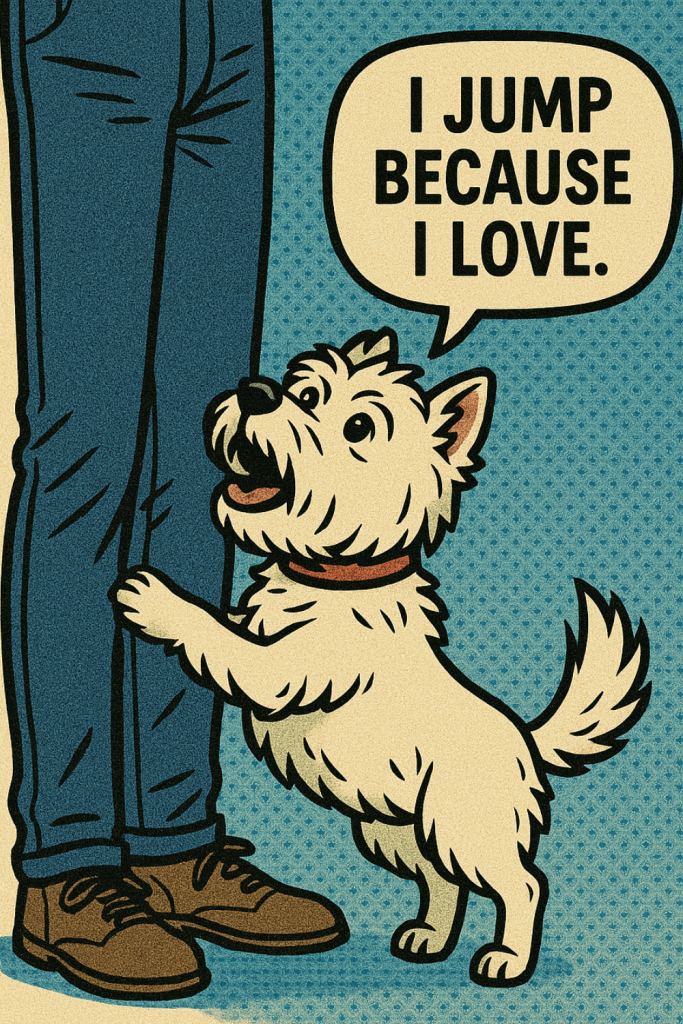
The good news is, if you helped encourage the behavior, you can also help change it. They’re not doing it to be bad—they just haven’t learned the right way to say hello yet.
Don’t Punish—Redirect Instead
If your first instinct is to scold your Westie or push them off when they jump, you’re not alone. It feels natural to say “No!” or “Down!”—especially when they’re bouncing off your guests like a pogo stick.
But here’s the thing: Westies are terriers. They’re smart, but they’re also stubborn.
Yelling might get their attention in the moment, but it doesn’t actually teach them what to do instead. And pushing them off can even make it worse—because now they think jumping gets them noticed, which is exactly what they want.
Instead of punishing, focus on redirecting their energy into a better behavior.
Think of it this way: Your dog’s brain is going, “Jumping makes humans look at me. Success!”
Your job is to rewire that thought into, “Sitting calmly gets me what I want.”
And believe it or not, it works. With some consistency, patience, and a few treats (okay, a lot of treats), your Westie can absolutely learn a new, calmer way to say hi.
Next up, I’ll show you exactly how to do it.
Teach an Alternative Greeting Behavior
Alright, so we know jumping isn’t the best way for your Westie to say hi—but what should they do instead?
Teach them to sit.
It’s simple, it’s polite, and most importantly, it’s something your Westie can actually learn (even if they’re stubborn little fluffballs).
Here’s how to get started:
Step 1: Practice When It’s Calm
Don’t wait for guests to arrive to start training. Practice the “sit” command during quiet times when your Westie isn’t bouncing off the walls. Use treats and lots of praise. Once “sit” is solid, you can start using it as their go-to greeting move.
Step 2: Use “Sit” When People Walk In
Before they have a chance to jump, ask your Westie to sit. If they stay seated, reward them right away—with a treat, some pets, or even just a happy voice.
Step 3: No Reward for Jumping
If they jump up, don’t push them off or shout. Just ignore them. Turn your back, avoid eye contact, and wait. As soon as all four paws are on the ground, try again.
Step 4: Repeat. A Lot.
Yes, this is the not-so-fun part. You’ll probably have to do it over and over again. But Westies are smart—once they figure out that sitting gets them what they want, they’ll start doing it more often.
You can also enlist a friend to help by walking in and out of the house so your pup gets practice with different people. Just make sure everyone knows the rules: no petting unless the Westie is sitting.
It might take some time, but trust me—teaching this one simple behavior can totally change how your dog greets people. And your guests will thank you for it.
Be Consistent (and Get the Whole Family On Board)
Consistency is everything when it comes to training a Westie. If one person in the house lets them jump while another is trying to train them not to—it’s going to confuse your dog, and you’re going to make way less progress.
Imagine this: Your Westie jumps on you, and you ignore it like you’re supposed to. But then your kid walks in the door, squeals “Awwww!” and starts petting them mid-jump. Now your dog is thinking, “Okay, so sometimes this works? Cool, I’ll keep trying!”
So here’s what you need to do:
- Set the ground rules for everyone in the house: no attention, no touching, and no eye contact unless the dog is sitting.
- Let visitors know ahead of time what you’re working on. Ask them to play along and not reward jumping.
- If you’ve got kids, make it a game—see who can get the best “sit” when they walk into the room.
When my family was trying to break Murphy’s jumping habit, we definitely had a few setbacks. It only takes one “aww she’s so cute” moment to undo a week’s worth of progress. But once we all got on the same page, things started to click.
It takes a little coordination, but if you stay consistent, your Westie will catch on—and faster than you might think.
Practice with Visitors
Once your Westie has started to get the hang of sitting for you and your family, it’s time to raise the stakes a bit—by bringing in visitors.
This is usually where things fall apart. New people are exciting, and Westies have zero chill when someone new walks through the door.
But here’s the trick: set your Westie up for success. Don’t just wait for someone to randomly knock—plan a few practice sessions with people who are in on the training.
Here’s how to do it:
- Keep your Westie on a leash when someone arrives, especially in the beginning. This gives you a bit more control and keeps things from turning into a full-on jump-a-thon.
- Have your guest completely ignore your dog unless all four paws are on the floor—or better yet, they’re sitting.
- When your Westie sits calmly (even if it only lasts a second!), praise and reward.
- Repeat the interaction a few times during the visit if possible. The more practice, the better.
The idea here isn’t to never let your dog greet people—it’s to teach them how to do it without climbing up their legs like a squirrel on a tree.
It might feel a little awkward at first, but those quick little practice sessions go a long way. Plus, it’s kind of fun to watch your Westie figure it out—and you’ll definitely feel proud when they finally greet someone without jumping like a maniac.
What to Do When Your Westie Still Jumps
Okay, so you’re doing everything right—training, treats, practice with visitors—and your Westie still jumps sometimes. Don’t worry. That’s totally normal.
Training isn’t a straight line. Some days your Westie will crush it. Other days, it’s like they’ve never heard the word “sit” in their life. That’s just part of the process.
When your Westie does jump, here are a few things you can do:
Stay Calm and Neutral
Avoid yelling or reacting in a way that gives them attention. Even negative attention can feel like a reward to a dog who’s just looking for a response.
Use Time-Outs (Gently)
If your dog is getting too worked up and won’t stop jumping, calmly remove them from the room for a minute or two. It’s not a punishment—it’s just giving them a chance to reset.
Go Back to Basics
If things start to slide, don’t be afraid to revisit the early steps of training. Go back to practicing “sit” during calm times, and gradually rebuild the behavior.
Celebrate Small Wins
Even if your Westie only stays seated for two seconds before launching themselves again—hey, that’s progress! Reward the small stuff and build from there.
The key here is patience. Your Westie isn’t being “bad”—they’re just excited and still figuring it out. Keep guiding them, stay consistent, and remind yourself: they will get it. (And when they do, it’s the best feeling.)
When to Call a Trainer
Sometimes, despite your best efforts, your Westie just isn’t getting it. And that’s okay. It doesn’t mean you’ve failed—it just means you might need a little backup.
Professional dog trainers aren’t just for “bad dogs.” They’re for regular dog owners (like us) who need some extra tools and support. If your Westie’s jumping is becoming a real issue—especially if it’s scaring kids, overwhelming guests, or just stressing you out—it might be time to bring in a pro.
A trainer can:
- Spot things you might be missing
- Give you a plan that works specifically for your dog
- Work with your Westie in a calm, structured environment
- Help speed up the results you’re looking for
There are group classes, one-on-one sessions, and even in-home options depending on what fits your needs and budget. Just make sure the trainer uses positive reinforcement methods—Westies respond way better to encouragement than punishment.
Remember, asking for help doesn’t mean you’re doing anything wrong. It just means you care enough about your dog (and your guests!) to get things on the right track. And that’s something to be proud of.
Wrap Up
Teaching your Westie not to jump on people isn’t something that happens overnight—but with a little patience (and maybe a pocket full of treats), it’s totally doable.
Remember, your Westie isn’t jumping because they’re trying to be naughty. They’re just excited, happy, and full of energy. That’s part of what makes them such lovable little dogs. But with the right training, they can learn how to channel that excitement in a way that doesn’t involve springing into people’s arms.
Start small. Stay consistent. Celebrate the little victories. And don’t forget to laugh when they get it hilariously wrong—because let’s be honest, that’s part of the fun too.
Whether your Westie is still in puppy mode or already a full-grown jumper, it’s never too late to start working on better greetings. And when your dog finally sits politely while someone walks in the door, you’ll know all that effort was worth it.
Good luck—and give your Westie a belly rub from me.